Does Rain Affect Solar Panels?

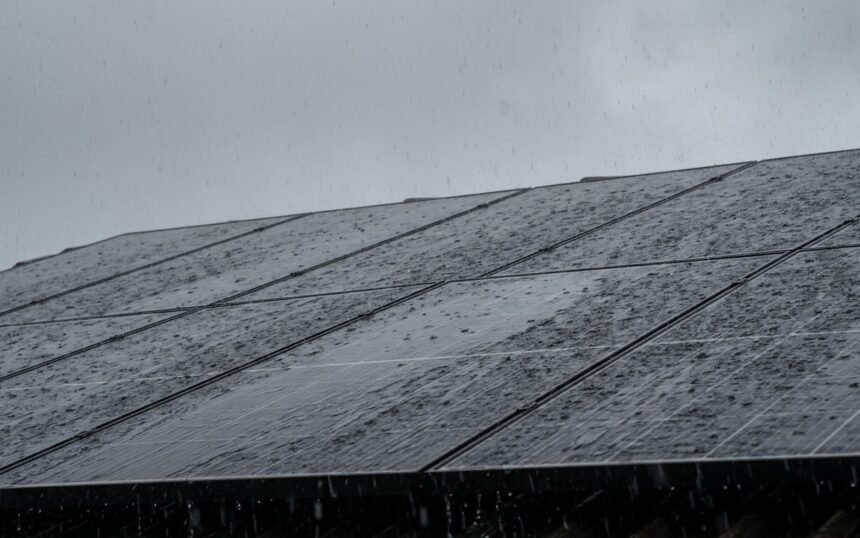
Rain does affect solar panel output — but not as much as you might think. Panels still generate electricity on rainy and overcast days, just at a reduced level. In fact, rainfall has some genuine benefits for your system. The UK’s climate is perfectly workable for solar energy, and millions of homeowners generate meaningful savings year-round.
Do Solar Panels Work in the Rain?
Yes — solar panels work in the rain. They don’t need direct sunlight to generate electricity. They need daylight, specifically diffuse light, which is present even on grey, overcast days.
On a heavily overcast or rainy day, panels typically operate at 10–25% of their rated capacity. On a bright but cloudy day, that figure rises to 50–80%.
So whilst a sunny July afternoon in Kent will always outperform a wet November morning in Manchester, your panels are never completely idle during daylight hours.
How Does Rain Actually Affect Solar Output?
Rain reduces solar output in two main ways:
1. Cloud cover blocks sunlight Rain usually comes with heavy cloud cover. Thick clouds significantly reduce the amount of solar irradiance reaching your panels. This is the primary reason output drops on rainy days — not the rain itself.
2. Reduced daylight intensity During storms or prolonged overcast periods, overall light intensity drops across the board. Your inverter will still convert whatever light reaches the panels, but there’s simply less to work with.
Here’s a rough guide to what you can expect:
| Weather Condition | Approximate Output (% of Rated Capacity) |
| Full sunshine, clear sky | 90–100% |
| Hazy sunshine, light cloud | 70–85% |
| Overcast but bright | 40–60% |
| Heavy cloud, light rain | 15–30% |
| Heavy rain, storm conditions | 5–15% |
| Night-time | 0% |
These figures vary depending on your panel type, system size, and roof orientation.
Does Rain Actually Benefit Solar Panels?
Surprisingly — yes. Rain has some genuine upsides for your solar system.
Natural cleaning Rain washes away light dust, pollen, and debris from the panel surface. A clean panel absorbs more light. After a spell of dry weather, a good downpour can actually give your output a small boost the following day.
Cooling effect Solar panels are more efficient at lower temperatures. This might seem counterintuitive — surely more heat means more energy? Not quite. Photovoltaic cells actually perform better when cool. The UK’s mild, often overcast climate is genuinely well-suited to solar generation for this reason.
A study by the Fraunhofer Institute for Solar Energy Systems found that solar panels in temperate climates can outperform those in hotter regions on an annual basis, largely due to the cooling benefits of lower temperatures and diffuse light conditions.
External link: Fraunhofer ISE — Solar Energy Research
Reduced thermal degradation Consistently high temperatures accelerate the gradual degradation of solar cells over time. The UK’s cooler, wetter climate helps panels last longer and maintain their rated output for more years.
How Much Solar Energy Can You Generate in the UK?
The UK receives an average of 1,100–1,400 kWh of solar irradiance per square metre per year. That’s less than southern Europe, but more than enough to make solar worthwhile.
To put it in perspective:
- A typical 4kWp domestic system in the UK generates around 3,400–4,000 kWh per year
- The average UK household uses approximately 3,500 kWh per year (Ofgem, 2024)
- A well-sited system can cover 50–70% of a household’s annual electricity demand
Even in Scotland — one of the cloudiest parts of the UK — homeowners with solar panels regularly see significant bill savings and Smart Export Guarantee payments.
Does the UK Get Enough Sun for Solar Panels?
This is one of the most common questions we hear — and the answer is yes.
The misconception is that solar panels only work well in hot, sunny countries. In reality, the technology is designed to work with light, not heat.
Germany is one of the world’s largest solar energy producers. It has a similar climate to the UK — and in many regions, less annual sunshine. Germany’s solar capacity exceeded 81 gigawatts in 2023, generating over 10% of the country’s electricity.
The UK consistently adds tens of thousands of new domestic solar installations each year. The technology works here. The economics work here. Rain is not a barrier.
External link: Solar Energy UK — Industry Statistics
Will a Storm Damage My Solar Panels?
Modern solar panels are built to withstand the UK’s weather — including storms, hail, and heavy rain.
Most panels are rated to:
- Wind resistance: withstand winds up to 140–160 km/h (well above typical UK storm conditions)
- Hail resistance: IEC 61215 standard requires panels to survive 25mm hailstones at 23 m/s
- Water ingress: IP67 or IP68 rating on junction boxes means panels are effectively waterproof
However, extreme weather events can occasionally cause damage — particularly to mounting systems, cables, or ageing panels. After any significant storm, it’s worth a visual inspection from the ground. Look for:
- Cracked or shattered glass
- Panels shifted out of alignment
- Visible damage to mounting frames
- Unusual drop in output on your monitoring app
If you spot anything concerning, contact a qualified engineer before going near the system yourself.
Does Rain Affect Solar Panel Longevity?
Not significantly — provided your system was correctly installed.
Well-installed panels with properly sealed junction boxes and quality mounting hardware are fully weatherproof. The UK’s rainfall should cause no long-term issues whatsoever.
Where problems can arise:
- Poor installation — improperly sealed roof penetrations can allow water ingress into your roof structure (not the panels themselves)
- Ageing seals — on older systems, rubber seals around junction boxes may degrade over time
- Pooling water — flat or very low-pitched installations may allow water to pool, which can accelerate wear
This is another reason to use an MCS-accredited installer and schedule periodic maintenance checks.
How to Maximise Solar Output During Wet UK Weather?
You can’t control the weather — but you can optimise your system to get the most from every daylight hour.
1. Choose the right panel type Monocrystalline panels perform better in low-light conditions than older polycrystalline models. If you’re installing a new system, monocrystalline is the standard choice for UK conditions.
2. Optimise your roof orientation and tilt South-facing panels at a 30–35° tilt capture the most annual irradiance in the UK. East or west-facing panels still perform well and can spread generation across more hours of the day.
3. Add battery storage A solar battery lets you store surplus energy generated on brighter days and use it during grey periods or at night. This dramatically improves your self-consumption rate.
4. Keep panels clean After dry spells, dust and debris build up and reduce output. Rain helps — but a manual clean once or twice a year ensures peak performance.
5. Monitor your system regularly Most modern inverters come with monitoring apps. Keep an eye on your daily and monthly generation figures. An unexplained dip could indicate a fault, not just bad weather.
Seasonal Solar Output: What to Expect in the UK
Output naturally varies throughout the year. Here’s a rough seasonal guide for a 4kWp south-facing system in central England:
| Season | Average Monthly Output | Notes |
| Spring (Mar–May) | 350–450 kWh | Strong generation, longer days |
| Summer (Jun–Aug) | 450–550 kWh | Peak generation period |
| Autumn (Sep–Nov) | 150–300 kWh | Declining daylight, more rain |
| Winter (Dec–Feb) | 60–130 kWh | Low sun angle, shorter days |
Winter output is lower — but not zero. Even in December and January, your panels generate useful amounts of electricity on bright, cold days.
Key Takeaways
- Solar panels work in the rain — output drops but never reaches zero during daylight.
- Heavy cloud cover reduces output more than rain itself.
- Rain naturally cleans panels and helps them run cooler and more efficiently.
- The UK receives sufficient solar irradiance to make panels worthwhile everywhere.
- Modern panels are weatherproof and designed for the UK climate.
- Monocrystalline panels, correct orientation, and battery storage maximise year-round performance.
- Schedule a visual inspection after any significant storm.
Frequently Asked Questions
1. Do solar panels work on cloudy days in the UK?
Yes. Solar panels generate electricity from daylight, not just direct sunshine. On overcast days, output typically falls to 20–60% of rated capacity depending on cloud thickness. They never produce zero electricity during daylight hours.
2. Can heavy rain damage solar panels?
Unlikely — modern panels carry IP67 or IP68 waterproof ratings and are tested to withstand severe weather. Damage is more likely from extreme hail, falling debris, or high winds affecting the mounting structure rather than rainfall itself.
3. Does rain clean solar panels effectively?
Light rain removes loose dust and pollen. It doesn’t effectively remove bird droppings, hard water stains, or built-up grime. A manual clean once or twice a year is still recommended for optimal performance.
4. Is the UK climate suitable for solar panels?
Absolutely. The UK receives 1,100–1,400 kWh/m² of solar irradiance annually. Germany — a major solar producer — has comparable or lower figures. Millions of UK homeowners generate meaningful savings from solar year-round.
5. Do solar panels work better in cold weather?
Photovoltaic cells are actually more efficient at lower temperatures. Hot panels lose efficiency — a phenomenon known as thermal degradation. The UK’s cool, temperate climate is genuinely well-suited to solar panel performance.
6. What should I do if my solar panels are damaged in a storm?
Do a visual inspection from the ground. Look for cracked glass, shifted panels, or damaged frames. Check your monitoring app for unusual output drops. Do not climb on the roof yourself — contact a qualified MCS-accredited engineer.
7. How much does rain reduce solar output?
During heavy rain with thick cloud cover, output can drop to 5–15% of rated capacity. On a bright but rainy day, it may remain at 30–50%. The cloud cover matters more than the rain itself.
8. Should I get battery storage if I live in a rainy part of the UK?
Battery storage is beneficial across all UK regions. It lets you store energy generated on sunnier days and use it when output is lower. It’s particularly valuable in wetter regions like Scotland, Wales, and the North West.
9. Will my solar panels generate enough electricity in winter?
Yes — though at reduced levels. A 4kWp system in central England typically generates 60–130 kWh per month in winter. Combined with battery storage and smart energy habits, this still delivers meaningful savings on your bills.
Thinking about solar panels or want to get more from your existing system? Get in touch with the Welton Renewables team for expert advice and a free, no-obligation quote.