Do Solar Panels Need Regular Cleaning?

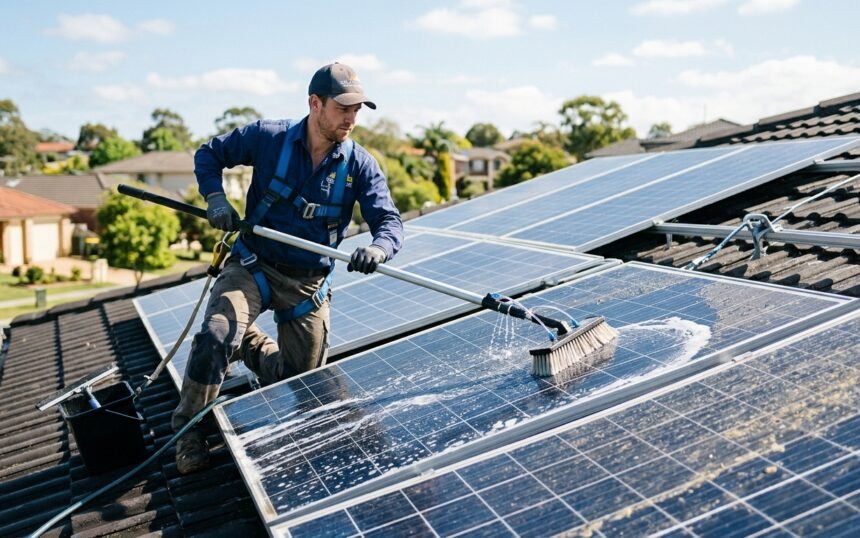
Yes — solar panels do benefit from regular cleaning. Dust, bird droppings, and leaf debris block sunlight and reduce energy output by up to 25%. In the UK, rainfall helps with light dust. But a proper cleaning once or twice a year keeps your system performing at its best.
If you’ve invested in solar panel installation, you want every kilowatt-hour you can get. Dirty panels simply don’t generate as much power. This guide covers how often to clean, what to use, and when to call a professional.
How Much Do Dirty Solar Panels Affect Output?
Soiling — the build-up of dirt on panels — is one of the most common causes of reduced solar output. Research from the University of California found that heavily soiled panels can lose up to 25% of their energy yield. Even light dust can reduce output by 5–10%.
In the UK, studies by the Solar Energy Industries Association suggest a well-maintained domestic system produces roughly 3–5% more electricity annually than a neglected one.
The impact depends on your location and surroundings:
- Near a busy road? Traffic pollution builds up quickly.
- Under trees? Sap, pollen, and leaves are a regular problem.
- Close to farmland? Dust and debris settle fast in dry seasons.
- Near the coast? Salt residue can be particularly stubborn.
Does Rain Clean Solar Panels in the UK?
To an extent — yes. UK rainfall does wash away light dust and some loose debris. Most solar panels are tilted at an angle, which helps rainwater run off. This is why panels in wetter regions (Scotland, Wales, North West England) may need less frequent manual cleaning.
However, rain does not remove:
- Bird droppings (highly acidic and sticky)
- Pollen and sap deposits
- Mineral residue from hard water
- Built-up grime in corners and around frames
If your panels look visibly grimy after a dry spell, don’t count on the next shower to sort it.
How Often Should You Clean Solar Panels?
For most UK homes, cleaning solar panels once or twice a year is sufficient. Spring and late summer are the ideal times — before and after the peak generation season.
| Situation | Recommended Frequency |
| Urban area, moderate rainfall | Once a year |
| Near trees, farmland, or coast | Twice a year |
| After a prolonged dry spell | As needed |
| Following heavy bird activity | As soon as possible |
| Commercial or large rooftop system | Quarterly or as per monitoring data |
If your solar monitoring app shows a sudden drop in output, check the panels. It might just be dirt.
How to Clean Solar Panels Safely: Step-by-Step
Cleaning solar panels yourself is possible — but safety comes first. Working at height carries real risks. If your roof is steep or you’re not confident, always hire a professional.
1. Turn off your solar system — Follow your inverter’s shutdown procedure before starting.
2. Clean in the morning or evening — Avoid midday sun. Hot panels can crack when cold water hits them.
3. Use lukewarm water and a soft brush — A long-handled squeegee or solar panel brush works well. Avoid abrasive materials.
4. Add mild soap if needed — A small amount of washing-up liquid is fine. Avoid harsh chemicals, they can leave streaks or damage the surface.
5. Rinse thoroughly — Make sure no soap residue remains. It attracts more dirt.
6. Let panels air dry — Or use a soft squeegee to remove excess water.
Safety note
Never walk on solar panels. Never use a pressure washer — the force can damage seals and wiring. If panels are roof-mounted, consider professional cleaning to avoid falls.
What Should You Avoid When Cleaning Solar Panels?
- Pressure washers — too forceful for panel surfaces
- Abrasive sponges or scourers — can scratch the glass
- Detergents with strong chemicals — can leave residue or stains
- Cleaning during peak sunlight — thermal shock risk
- Tap water with high mineral content — leaves white marks when dry (use deionised water if possible)
Professional vs DIY Solar Panel Cleaning
| DIY Cleaning | Professional Cleaning | |
| Cost | Low (equipment only) | £50–£150 per visit (UK average) |
| Safety | Risk if working at height | Trained, insured operatives |
| Equipment | Soft brush, hose, mild soap | Specialised tools, deionised water systems |
| Quality | Good for surface dirt | Better for stubborn grime and hard water stains |
| Inspection included? | No | Often yes — can spot faults early |
At Welton Renewables and Electrical Services, our maintenance visits include a full visual inspection alongside cleaning. We check for microcracks, loose connections, and panel degradation — things a standard clean won’t reveal.
Signs Your Solar Panels Need Cleaning Now
- Visible layer of dust, grime, or bird droppings
- Output readings noticeably lower than usual
- Panels haven’t been cleaned in over 12 months
- Extended dry, dusty period without rain
- You’re in an area with high bird or tree activity
Do Anti-Soiling Coatings Help?
Yes — hydrophobic and anti-soiling coatings are becoming more popular in the UK. These coatings help water bead off the surface, taking dirt with it. They can reduce cleaning frequency significantly.
They’re not a permanent fix, but a good-quality coating applied by a professional can last several years and improve self-cleaning performance during rainfall.
Key Takeaways
- Solar panels do need regular cleaning — rain alone isn’t enough.
- Clean once or twice a year for most UK properties.
- Bird droppings and hard water stains need manual removal.
- Use soft brushes, lukewarm water, and mild soap.
- Avoid pressure washers, abrasive tools, and strong chemicals.
- Professional cleaning offers better results and includes inspections.
- Anti-soiling coatings can reduce cleaning frequency.
Frequently Asked Questions
1. How often should I clean my solar panels in the UK?
Once or twice a year is sufficient for most UK homes. Clean in spring and late summer to maximise output during peak sun months. Increase frequency if you live near trees, a busy road, or the coast.
2. Can I use a hosepipe to clean solar panels?
A gentle hosepipe is fine for rinsing. Never use a pressure washer — the force can damage wiring seals and panel coatings. Use the lowest setting and keep a safe distance.
3. Will bird droppings damage my solar panels?
Bird droppings are acidic and can permanently stain or etch panel glass if left for long periods. They also block sunlight on the affected cell, which can reduce the output of the entire panel string. Remove them promptly.
4. Does cleaning solar panels make a noticeable difference?
Yes — in many cases it does. Studies show dirty panels can lose 5–25% of their output depending on soiling levels. Regular cleaning helps ensure you’re getting the energy yield your system is designed to deliver.
5. Is it safe to clean solar panels myself?
Ground-level or low-pitch panels can be cleaned safely with the right tools. For roof-mounted systems, working at height poses a risk. Always follow safety guidelines, and consider a professional if you’re unsure.
6. What is the best time of day to clean solar panels?
Early morning or evening is best. Avoid cleaning in direct sunlight when panels are hot — pouring cold water onto hot glass can cause thermal stress and potentially crack the surface.
7. Can I use tap water to clean my solar panels?
You can, but hard water (common in many parts of England) leaves mineral deposits that create streaks and attract more dirt. Deionised or purified water gives a cleaner finish with no residue.
8. How do I know if my solar panels need cleaning?
Check your solar monitoring app for unexplained drops in output. Visually inspect panels for visible grime, bird droppings, or debris. If it’s been over 12 months since the last clean, it’s time for another.
9. Do anti-soiling coatings actually work?
Yes — quality anti-soiling or hydrophobic coatings help rainwater bead off the panel surface and carry dirt with it. They won’t eliminate the need for manual cleaning, but they can noticeably extend the intervals between cleans.