South-Facing vs East-Facing Roofs: Which Is Better for Solar?

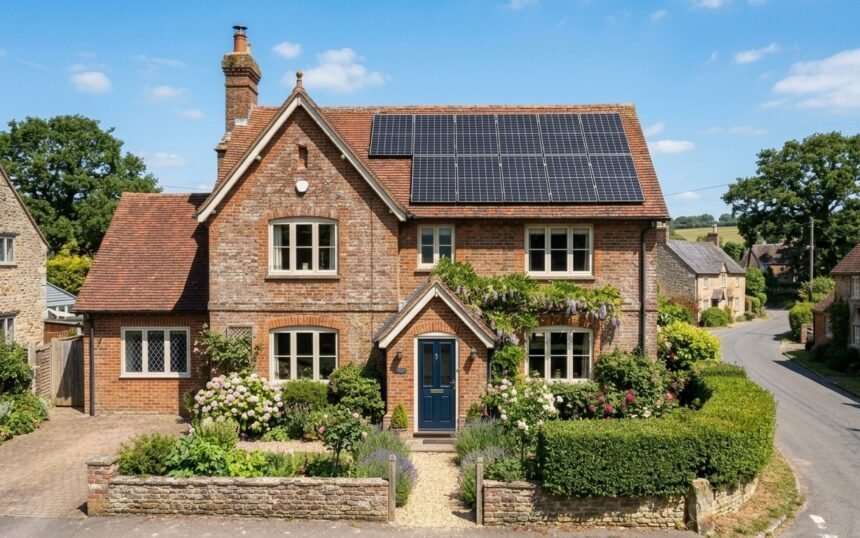
South-facing roofs generate more solar energy overall. They typically produce 100% of optimal output, compared to 80–90% for east-facing roofs. But east-facing roofs aren’t a poor choice. They suit households using more power in the morning.
The right answer depends on your usage patterns, not just raw output. Here’s the full breakdown.
Key Takeaways
- South-facing roofs deliver the highest annual solar output.
- East-facing roofs still generate 80–90% of that output.
- Roof pitch and shading matter as much as direction.
- East-west split arrays can match household usage patterns better.
- A professional site survey confirms your best system design.
Why Does Roof Direction Matter for Solar Panels?
The sun tracks across the southern sky in the UK. Panels facing south capture sunlight throughout the entire day.
East-facing panels catch morning sun instead. They generate less overall, but at a different time.
Your roof’s compass direction directly affects how much electricity your system produces annually.
South-Facing Roofs: The Benchmark for Solar Output
South-facing roofs are considered the gold standard for UK solar installations. They receive direct sunlight from sunrise to sunset.
Key benefits:
- Highest annual electricity generation
- Best return on investment per panel
- Steady output through midday peak hours
- Most cost-effective per kWh produced
A south-facing roof at 30–35° pitch typically generates 950–1,050 kWh per kWp yearly in many UK regions.
East-Facing Roofs: Still a Strong Option
East-facing roofs generate less total electricity than south-facing ones. But they capture morning sun when many households use energy.
Key benefits:
- Strong morning generation for breakfast-time usage
- Cooler operating temperatures than midday-facing panels
- Still produces 80–90% of south-facing output
- Suits households with early-rising routines
Many homeowners assume east-facing roofs aren’t worth it. That’s simply not true.
South vs East-Facing Roofs: Quick Comparison
| Factor | South-Facing | East-Facing |
| Annual output | 100% (benchmark) | 80–90% |
| Peak generation time | Midday | Morning |
| Best suited for | All-day usage | Morning-heavy usage |
| Typical kWh/kWp yearly | 950–1,050 | 800–950 |
| Panel operating temperature | Higher | Cooler |
How Much Less Electricity Does an East-Facing Roof Produce?
East-facing panels typically produce 10–20% less electricity annually than south-facing panels. This gap is smaller than most homeowners expect.
The financial impact depends on your electricity usage timing. If you’re often home in the mornings, that gap narrows further through better self-consumption.
Does Roof Pitch Affect the Comparison?
Yes. Roof pitch changes how much sunlight panels receive at any orientation.
- 30–35° pitch is optimal for most UK roofs
- Steeper pitches suit south-facing roofs less in summer
- Shallower pitches can slightly favour east or west orientations
- Correct pitch calculation matters more on non-south roofs
A qualified installer will factor in your specific pitch during design.
Which Roof Type Suits Your Household Better?
Consider your daily routine before choosing.
Choose south-facing if:
- You work from home and use power throughout the day
- You want maximum annual generation
- You’re prioritising fastest payback period
Choose east-facing if:
- Your household is busiest in the mornings
- South isn’t available and east is your best option
- You want cooler-running panels with a longer lifespan
Can You Combine East and West-Facing Panels?
Yes, many homes benefit from a split array. This spreads generation across morning and evening hours.
An east-west combination often better matches real household energy use than a single south-facing peak. It also reduces the amount of surplus power exported cheaply at midday.
What About Panel Efficiency and Shading?
Orientation isn’t the only factor affecting output. Shading from trees, chimneys, or nearby buildings can reduce generation by 20–50%.
A well-positioned east-facing roof with no shading can outperform a partially shaded south-facing roof. This is why a proper site survey matters more than orientation alone.
If you’re planning a solar PV installation, our team assesses your exact roof pitch, shading, and orientation before recommending a system size.
Frequently Asked Questions
1. Is south-facing always the best option for solar panels?
Generally yes, for maximum annual output. But east or west-facing roofs can suit certain households better depending on usage patterns.
2. How much less energy does an east-facing roof produce than south?
Typically 10–20% less annually, though this varies with pitch, shading, and local sunlight conditions.
3. Can I install solar panels on an east-facing roof?
Yes. East-facing roofs are common across the UK and still deliver strong financial returns.
4. What’s the ideal roof pitch for solar panels?
Most UK installations perform best between 30 and 40 degrees, regardless of exact compass direction.
5. Does shading matter more than roof orientation?
Sometimes. Heavy shading can reduce output more than a non-ideal orientation would.
6. Should I choose east-facing panels if I’m rarely home in the afternoon?
Yes, this can improve self-consumption, since generation matches your usage better.
7. Can I combine south and east-facing panels on the same roof?
Yes, if your roof has multiple pitches. This can balance generation across more of the day.
8. Does an east-facing roof affect solar battery storage benefits?
Not significantly. A battery still stores surplus generation, whatever your roof orientation.
9. How do I know which direction my roof faces?
A qualified installer can confirm this during a site survey, along with pitch and shading assessment.
10 Is it worth getting solar panels if my roof only faces east?
Yes. East-facing systems remain a worthwhile investment for most UK households.